New owner-operators run into these two words within their first week in the industry, usually in the same sentence, and often confused for each other. A freight broker and a freight dispatcher both sit between a shipper and a truck, and both get paid out of the money a load generates. Past that, they are almost nothing alike: different employer, different paycheck, different job.
Understanding the difference matters because it changes what you are actually shopping for. A carrier calling around for "a broker" when what they need is a dispatcher ends up in the wrong conversation, and sometimes the wrong contract. This article walks through what each role does, follows one load through the system so the relationship is concrete rather than abstract, and closes with a straightforward way to decide which one, if either, your operation actually needs.
What a freight broker does
A freight broker is a licensed intermediary who arranges transportation on behalf of a shipper. The shipper, a manufacturer, distributor, or retailer with freight that needs to move, has cargo but no truck, and often no relationship with a carrier that can move it on the lane and timeline required. The broker's job is to solve that problem: find a qualified carrier, negotiate a rate, confirm the details in writing, and manage the shipment until it delivers.
Critically, the broker works for the shipper, and is paid by the shipper. The shipper pays the broker an agreed rate for the full shipment. The broker then pays a carrier to actually move it, and the gap between those two numbers, the broker's margin, is how the broker earns money. That transaction happens whether or not the carrier ever meets the shipper directly. In most freight, they never do.
Freight brokerage is a licensed activity in the United States. Brokers hold their own operating authority and a surety bond, and they carry legal responsibility for the freight arrangement even though they never touch a truck or a pallet. A broker's core functions:
- Sourcing and vetting carriers for a given lane and equipment type.
- Negotiating and setting the rate the shipper pays for the shipment.
- Issuing paperwork, including the rate confirmation and bill of lading for the load.
- Tracking the shipment and managing exceptions, such as delays or damage claims.
- Paying the carrier, typically on a delayed cycle after delivery rather than on pickup.
What a freight dispatcher does
A freight dispatcher works for the carrier, not the shipper and not the broker. If you own a truck or run under your own MC authority, a dispatcher is effectively your outsourced back office and sales function rolled into one.
A dispatcher does not arrange shipments for shippers. Instead, a dispatcher searches for loads on your behalf, usually across load boards (the same load boards brokers post to) and through relationships with brokers the dispatcher already knows, negotiates the rate on those loads before you commit to hauling them, and files the paperwork, rate confirmations, and check calls that keep a load moving without you having to stop driving to do it.
The dispatcher is paid by you, the carrier, as a percentage of what you earn on each load. There is no separate payment from anyone else in the chain. If the dispatcher does not find you a load, or does not negotiate you a fair rate, the dispatcher does not get paid either, which is what aligns a dispatcher's incentives with yours in a way a broker's incentives never can: a broker is trying to move your capacity for as little as the shipper's budget allows, while a dispatcher is trying to sell your capacity for as much as the market will bear.
A dispatcher's core functions:
- Searching load boards and broker relationships for freight that fits your lanes and equipment.
- Negotiating the rate on your behalf before you accept a load.
- Handling paperwork, including rate confirmations and check calls.
- Tracking your Hours of Service and routing so you are not offered loads you cannot legally run.
- Managing broker relationships so repeat lanes get easier, not harder, over time.
How one load moves through the system
The clearest way to see the difference is to follow a single load from a shipper's warehouse to a driver's seat, without any of it staying abstract.
A manufacturer in Chicago has a full truckload of freight that needs to reach a distribution center in Dallas. The manufacturer does not run its own trucks and has no reason to. It calls a freight broker it already works with and describes the load: dry van, ready for pickup midweek.
The broker checks the lane, current market conditions, and available carrier capacity, then quotes the shipper a rate for the full move. The shipper agrees, and from that point forward the broker is contractually responsible for getting the freight to Dallas on time. The shipper will pay the broker once the load delivers and paperwork clears. That contract sits between the shipper and the broker; the truck that eventually hauls the load is not a party to it.
To actually move the freight, the broker now needs a carrier. It offers the load, at a lower rate than what the shipper agreed to pay, either on a load board or directly to carriers it has worked with before. The gap between what the shipper pays the broker and what the broker offers the carrier is the broker's margin: how the broker gets paid for arranging the shipment and carrying the liability if something goes wrong along the way.
This is where the dispatcher enters, and it is worth noticing whose side of the transaction they stand on. An owner-operator's dispatcher is the one watching the load boards and broker postings, not the driver behind the wheel. The dispatcher sees the offered load, checks it against the driver's location, remaining Hours of Service, and equipment, and calls the broker to negotiate the rate up before agreeing to haul it. Once the rate is set, the dispatcher handles the rate confirmation, schedules the pickup and delivery appointments, and stays on the load through delivery, following up with the broker on the driver's behalf if anything changes.
The driver hauls the load and delivers it in Dallas. The broker pays the carrier on its usual terms, commonly 30 to 45 days after delivery, and the dispatcher then takes its agreed percentage of that payment as its own fee.
Notice that the broker never spoke to the driver, and the dispatcher never spoke to the shipper. Each role only ever deals with the party immediately next to it in the chain. That is exactly why the two get confused from the outside: both look like "someone who found the load," even though one of them was hired by the shipper to move it as cheaply as the market allows, and the other was hired by the carrier to get paid for it as well as the market allows.
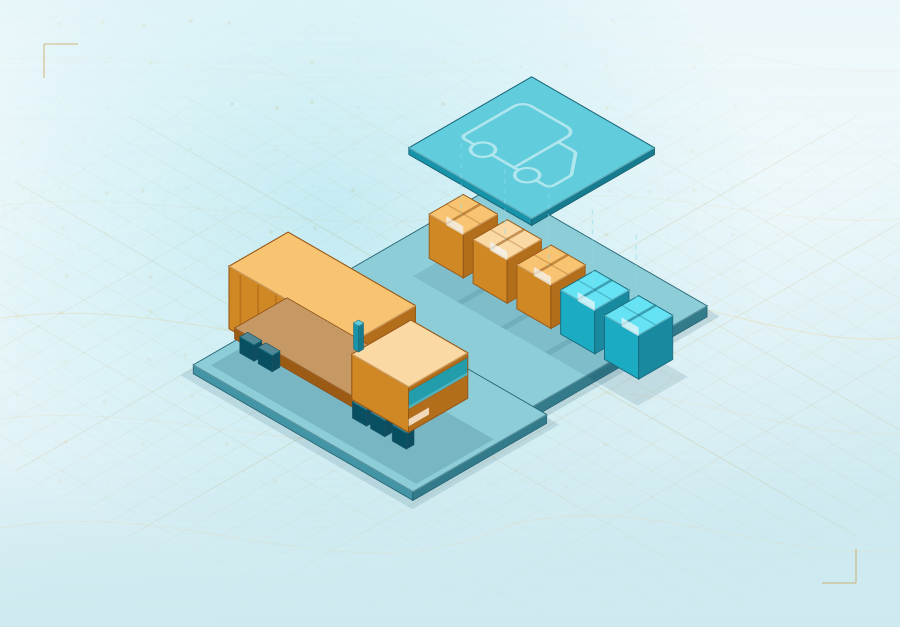
The core difference, in three questions
If the walk-through above is more detail than you need day to day, the difference collapses into three questions:
- Who do they work for? A broker works for the shipper. A dispatcher works for the carrier.
- Who pays them?A broker is paid by the shipper, out of the shipper's freight budget, before a carrier is even chosen. A dispatcher is paid by the carrier, as a cut of what the carrier earns on the load.
- What are they trying to do to the rate?A broker is trying to move the freight for as little as the market allows, since the spread between the shipper's rate and the carrier's rate is the broker's income. A dispatcher is trying to get you the highest rate the market will support, since their income is a percentage of yours.
Neither role is the villain in that description. Both are doing their job correctly when they act this way. That is exactly why a carrier who wants a fair shake on rate negotiation needs someone on their own side of the table, not just a better relationship with the party sitting across from them.
Do you need a broker, a dispatcher, both, or neither?
Most owner-operators asking "broker or dispatcher" are really asking how to get consistent freight at a fair rate, and for the large majority of them the answer is a dispatcher, not a broker relationship of their own.
You likely need a dispatcher if:
- You own your truck, or run under your own MC authority, and want someone finding and negotiating loads so you can focus on driving.
- You are new to a lane or region and have not built up broker relationships of your own yet.
- Paperwork, check calls, and rate confirmations are eating time you would rather spend behind the wheel.
You do not need a broker relationship of your own if:
- You are running one truck, or a handful, and are not planning to arrange freight for other carriers.
- Becoming a broker means holding a separate operating authority and bond, and taking on legal responsibility for shipments you do not physically control. That is a different business than trucking.
You might want more direct access to brokers, without becoming one yourself, if:
- You want more say over which brokers you work with and at what rate, beyond what a single dispatcher's contact list covers.
- You are scaling toward a small fleet and want established relationships across multiple brokerages rather than depending on one dispatcher's book of contacts.
You need neither if:
- You already run under contract carriage with a shipper, or have your own consistent freight, and load sourcing is not your bottleneck.
Where to go from here
For the large majority of new and small owner-operators, the practical starting point is a dispatch relationship: someone working exclusively for you, finding loads, negotiating rates, and handling the paperwork, while you keep the truck moving. See Truck Dispatch Services for how that works.
If your business has grown to the point where you want broader, more direct access to broker relationships, or you run a brokerage that needs an outsourced broker agent team to source carriers and cover loads under your own authority, that is a different conversation. See Brokerage Access for both tracks.
Whichever side of this you are on, the underlying rule does not change: know who is working for you, and who is getting paid to work against your rate. Everything else about dispatch and brokerage follows from that one distinction.